EXPLORING THE DEEP
Fantastic coral formations, whale harks, manta rays, dolphins, humpback
whales, nudibranchs and anemones are just some of the fascinating
marine life inhabiting the waters of Ningaloo Marine Park.
 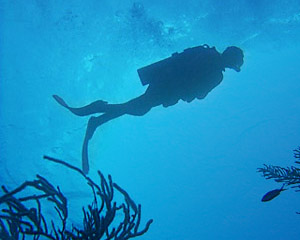 
Ningaloo Reef is one of the world's largest coral fringing reefs
and the various diving and snorkeling tours that depart from Exmouth
and Coral Bay can take you on the experience of a lifetime.
Whalesharks are one of the many seasonal visitors to the Ningaloo Marine Park. Humpback whales visit between June and November and many of the females give birth in the deeper offshore waters. Manta rays are in the area year round but in more prolific numbers between May and November. Marine turtles, including Green, Longhead and Hawksbills, inhabit Ningaloo all year and begin their nestling season around November. Hatchlings start appearing in January.
Add to this the 250 species of coral and over 500 species of fish
and the Ningaloo Reef is an impressive diving destination year round!
There are many world class diving sites accessible from both Exmouth
and Coral Bay.
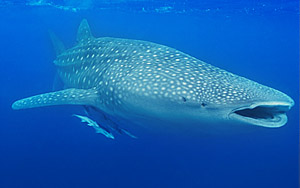
WHALESHARKS
Every year from April to June following the mass spawning of coral,
the world's biggest species of fish congregate in the Ningaloo Marine
Park. These are the whalesharks. The chance to snorkel with these
gentle giants is the opportunity of a lifetime and visitors from
all over the world head to the Ningaloo Reef during Whaleshark season.
These massive filter feeders can grow up to 18 m long. They cruise
the world's ocean in search of concentrations to feed on.
Ningaloo Reef is one of only places they appear regularly in large numbers.
Very little is known about the biology of these creatures so research
is ongoing. Day tours to snorkel with whalesharks depart daily during
the season from both Exmouth and Coral Bay. The experience is open
to confident swimmers of all ages.
|
|
LOTTIE'S LAGOON
This site is located close to shore next to a reef wall and has a sandy bottom dotted with coral bombies. At depth of 12 m, turtles and moray eels are commonly sighted, along with stingrays and many giant clams.
THE ELBOW
This outer reef dive (maximum depth is 18 m) is characterized by a limestone wall and is the site of a cleaning station for large marine life, such as manta rays, large cods and moray eels. There are also smaller species such as nudibranchs and dancing cleaner shrimp.
23rd PARALLEL
This is a deeper dive with depths of up to 23 m alongside a reef
wall. There are many schools of colourful reef fish and spectacular
hard coral formations, as well as soft corals and seafans.
MUIRON ISLANDS
The environment of these two islands just 9.8 nautical miles off
the tip of the North West Cape is tranquil. Warm tropical waters
teeming with marine life surround the uninhabited islands. In waters
of depth 3-20 m just off the shoreline there are coral gardens made
up of both hard and soft corals. There are a variety of dive sites
off the Muirons that provide and an unforgettable experience. Please
note that camping on the islands requires permission from the Shire
of Exmouth and the Department of CALM.
LIGHTHOUSE BAY
There are a number of excellent dive sites in the Lighthouse Bay
area, including Blizzard Reef, The Labyrinth and Helga's Tunnels.
There are pristine coral formations and an array of beautiful tropical
fish along with reef sharks and schools of pelagic fish. Depths
of both Blizzard and Labyrinth range from 12-18 m, while Helga's
has a maximum depth of 30 m.
ASHO'S GAP
Only 15 minutes away by boat from Coral Bay, Asho's Gap is a spectacular
reef dive with over 180 species of coral. Huge schools of trevally
are often seen here, as well as reef sharks as they visit their
local "cleaning station". Maximum depth on this dive is 12 m.
Go to next section:
 location
and climate location
and climate |


